
Start with comfortable light for guests, soft light on faces and separate lighting for the décor. A reception can feel warm and intimate while people can still read the menu, see their food and walk confidently.
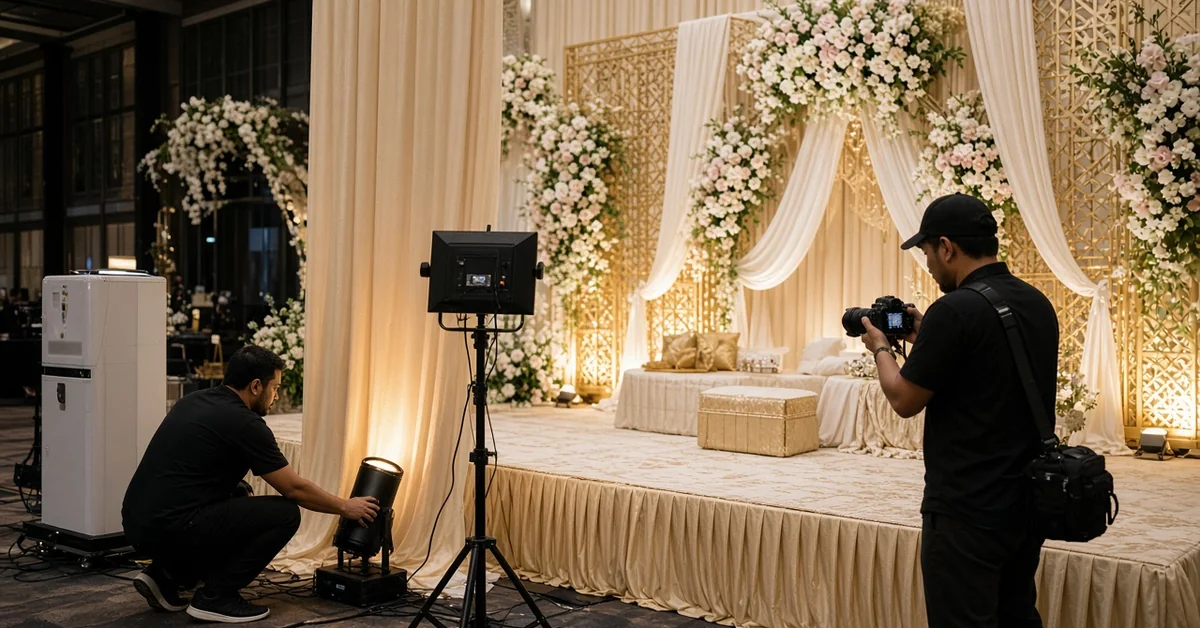
For a Malay wedding in Singapore, give particular attention to the pelamin, the couple’s entrance and family photographs. Agree the lighting plan with the venue, photographer and lighting operator before approving decorative extras.
Visit the Venue at Your Reception Time
When comparing wedding venues in Singapore, arrange a viewing around the time your reception will take place. A room that looks bright at lunchtime may feel very different after sunset.
Ask the team to demonstrate the lighting intended for your event. Check which ceiling lights can be dimmed independently and whether the pelamin, dining area and entrance have separate controls.
For ballroom and poolside wedding options, assess each setting separately. Indoors, look for window glare and dark corners. Outdoors, check how tables and routes will be lit after daylight fades. If rain means moving inside, include lighting in that alternative layout.
Give Each Area a Clear Lighting Job
Mark the main areas on your floor plan before discussing fixture quantities.
| Reception area | What the lighting should achieve |
|---|---|
| Entrance and registration | Make signs, names and arriving guests easy to see. |
| Dining tables and buffet | Illuminate faces, food and labels without dazzling seated guests. |
| Pelamin and family photo area | Provide even light across the couple and the full group. |
| Aisles, steps and exits | Keep routes and changes in floor level clearly visible. |
| Backdrop and flowers | Add depth and atmosphere without overpowering people. |
Keep decorative lighting separately controllable where possible. You can then soften the room’s appearance while retaining useful light at tables and along walking routes.
Light Faces Before Lighting the Pelamin Backdrop
A brightly illuminated pelamin can still produce disappointing portraits if the couple sit in shadow. Ask for broad, softened light directed towards faces from suitable front or side positions.
Avoid relying entirely on ceiling downlights, which can leave shadows beneath eyes. Floor uplights should mainly illuminate décor; shining them directly upwards at faces creates an unnatural effect.
Test the setup with two people seated where the couple will sit. Then add several people standing beside and behind them.
Check reflections in spectacles, shiny fabric and jewellery. The photographer should assess whether facial detail and pale clothing remain visible beside a bright backdrop. A flash may help still photographs, but guests and video recordings also need continuous light.
Keep Colour Consistent Where People Are Photographed
Warm white lighting can suit an evening reception, but different shades of white falling across one face can make colour correction difficult. Strong pink, blue or green light can also change how skin, makeup and wedding outfits appear.
Agree a consistent white light for the pelamin and other main portrait positions. Keep coloured effects on the background, with their beams directed away from people.
For hired white lighting, ask about a colour rendering index, or CRI, of 90 or above as a useful starting point. This rating describes colour fidelity, but it does not guarantee how a camera will record every colour.
Test actual skin tones and fabric samples. Matching the colour temperature setting alone does not ensure two different lights will look identical.
Check Comfort From a Guest’s Seat
Sit at several tables, including those nearest the stage and at the back of the room.
Can you read a menu comfortably? See the person opposite? Look towards the pelamin without a spotlight shining into your eyes? Older guests may need more light and can find glare particularly difficult.
Use shaded or diffused table lights and aim any spotlights at the tabletop, away from guests’ eyes. Check that tall centrepieces do not cast heavy shadows over plates. Candles and fairy lights can contribute atmosphere, but should not be the only useful illumination.
Walk the routes to the buffet, toilets and prayer space. Keep steps visible, arrange protected cable routes and leave exit signs and emergency lighting unobstructed and operating. Ask the venue team to handle equipment placement.
Test LEDs With the Actual Cameras
Some LED lighting can create bands or flicker in photographs and video, even when it appears steady to the eye. A phone preview alone cannot confirm that the photographer’s and videographer’s equipment will behave the same way.
Ask both teams to test the planned lights at the brightness settings you expect to use. Include normal video and any intended slow motion footage.
Review recorded clips and photographs, rather than relying only on a live camera display. If problems appear, the teams should agree suitable camera settings or changes to the lighting equipment before the reception.
Plan Lighting Changes Around the Programme
Give the lighting operator a short schedule linked to the reception programme. Record who will call each change, usually an agreed coordinator working with the emcee.
During arrivals and dining, guests need clear, comfortable visibility. For the couple’s entrance, decorative lights can change while the walking route remains lit. During speeches, illuminate the speaker’s face and keep enough room light for guests and service staff.
If you are showing a slideshow, dim lights affecting the screen without blacking out the whole room. For family photographs, return to the tested portrait setting.
Use gradual transitions where practical, and agree any moving or flashing effects in advance. Avoid surprise lighting changes during important photographs or video moments.
Confirm Costs and Approve the Final Setup
Review your Malay wedding package and ask exactly which lighting is included. An audio visual system or decorated stage does not automatically confirm dedicated portrait lighting, separate dimming or an operator throughout the reception.
Request an itemised quote covering equipment, installation, operation, removal and any overtime. Confirm venue approval for additional fixtures, cable routes, outdoor equipment and hanging arrangements. Ask who will provide a replacement if an essential light fails.
If the budget is limited, prioritise comfortable dining light, visible routes and flattering coverage at the pelamin. Add decorative effects once those needs are covered.
Before guests arrive, check the finished room with the tables, flowers and backdrop in place. Repeat the seated comfort check and take test photographs with people in position.
To prepare for that discussion, contact Malay Wedding Venue with your reception timing, proposed layout and photography plans. Ask the team to confirm the available lighting, any additions needed and who will manage changes on the day.
Frequently Asked Questions
What lighting works best for wedding photographs?
Soft, even white light on faces, with a separately lit backdrop, is a useful starting point. Test the setup with your photographer.
Should wedding reception lighting be warm or cool?
Warm white often suits evening receptions. Keep the lighting consistent around faces and ask your photographer to check the colours before confirming settings.
Are fairy lights enough for a wedding reception?
Usually not on their own. Use them for atmosphere alongside sufficient lighting for dining, walking routes and photographs.
Can LED lights cause problems in wedding videos?
Some can produce flicker or bands. Test the actual fixtures at the intended brightness and recording settings before guests arrive.