
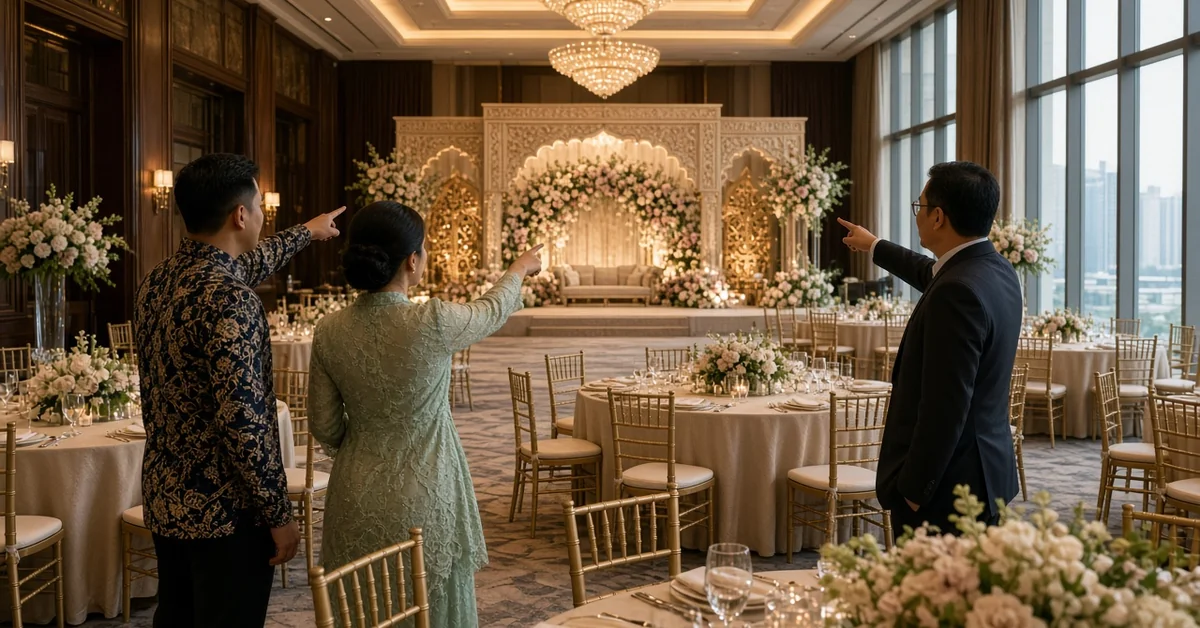
Before approving your pelamin design, sit where your guests will sit and check whether you can see both partners clearly. Repeat this from the front, middle, back and sides of the seating area. Include the proposed flowers, bridal chairs and table decorations in the test, because an empty room gives an incomplete picture.
For a wedding at Royal Palm OCC, make the viewing part of the layout discussion with your venue coordinator and decorator. The aim is for guests to follow the celebration comfortably from their seats, without repeatedly leaning around flowers or standing to see you.
Start with the Exact Room and Seating Plan
Ask for a floor plan of the space reserved for your wedding at Royal Palm OCC, showing the proposed pelamin position and actual table arrangement. A photograph of another wedding can suggest a style, but its layout may have served a different guest count.
Confirm how many guests will be seated at the busiest point. If your reception includes different arrival periods, the total invitation count alone will not tell you how many tables need to fit.
Mark the stage, steps, guest tables, couple’s dining table, buffet stations and main walking routes. Include any columns, partitions or equipment that could interrupt a view. Number the tables so you can record precisely where a problem appears.
Check Where Your Faces Will Be When Seated
The important viewing point is the couple’s seated faces. Ask the decorator to confirm the platform height, bridal seat height and how far back the chairs will sit. The overall height of a floral backdrop cannot tell you whether guests will see over people seated ahead.
During a mock setup, have two people sit in the proposed bridal positions while someone checks from guest chairs. Use the actual bridal seating, or a close equivalent, where possible.
If the stage is not installed, request a drawing showing the couple’s seated position above floor level. Treat that as a planning aid and repeat the physical check after installation. Avoid approving a higher platform without the venue and decorator confirming its suitability and access arrangements.
Test Several Chairs at Each Table
Start with the seats most likely to have an awkward angle: the far rear corners, outer side tables and any positions behind a fixed obstruction. Then work towards the centre and front.
At each selected table, try the chair nearest the stage, the farthest chair and seats on either side. Round tables give guests different angles, so one good view does not establish that the whole table works.
Check whether you can see both faces, how much you need to turn, and whether someone seated ahead blocks the view. Ask a companion to occupy the next table during the test.
Take a photograph from seated eye level and label it with the table number and chair position. Use photographs to document obstructions; judge comfort and visibility with your own eyes.
Place Flowers and Centrepieces in the Test
A clear view can disappear once the room is decorated. Ask to see the proposed table centrepiece, including its stand, foliage and hanging details. A narrow stem may support a wide arrangement that sits directly in front of the couple.
Check pelamin flowers from side tables too. Decorations framing the bridal seats can conceal one partner when viewed diagonally. Adjust their position or density while someone watches from the affected seat.
When reviewing the Malay wedding packages, discuss the pelamin, bridal seating, table centrepieces and lighting together. Confirm the exact items in your booking and whether substitutions are possible.
Test the couple’s dining table in its intended position as well. Its flowers, chairs or other decorations may interrupt the view towards the pelamin.
Adjust the Layout Around the Blocked Seats
Record each problem before changing anything. “Table 12, outer chair: groom hidden by flower stand” gives the coordinator a clear issue to solve.
Start with the smallest workable adjustment. Moving a flower stand, reducing foliage or repositioning a centrepiece may restore the view. If another guest’s head is the obstruction, ask whether the affected table can be offset slightly from the table ahead.
Recheck neighbouring seats after every move. Improving one angle can create a new obstruction elsewhere.
Ask the venue to review any changes to table positions, spacing or stage placement. Keep the agreed walking routes and exits clear, and allow room for chairs in use. Reserve suitable seats for guests who would find repeated turning or standing difficult, including guests using wheelchairs.
View the Pelamin Under Reception Lighting
Arrange a lighting check that resembles your event. For a daytime celebration, assess how daylight falls across the bridal seats. For an evening reception, check the intended room lighting alongside the pelamin lights.
Sit at the rear and side tables while two people occupy the bridal positions. Look for faces lost in shadow, a bright backdrop that makes faces harder to see, or lights shining towards guests.
Ask the lighting team to adjust the setup and repeat the check. A photograph can help identify a problem, but the seated view remains the main test.
If a screen will supplement distant views, confirm whether a live camera feed is available and included. Check the screen’s visibility from the affected seats before relying on it.
Rehearse Movement Around the Pelamin
Invite a few helpers to walk through the planned entrance route and towards the stage while you remain seated at a guest table. This reveals interruptions that a static layout cannot show.
Discuss where relatives will wait for photographs and how they will approach and leave the pelamin. A queue gathered directly in front of the couple can block several tables at once.
Include the photographer and videographer in this discussion. Agree where they can work during key moments and where tripods or lights may stand. They need space to capture the celebration, while guests need a reasonable view.
Ask the coordinator how buffet queues and service routes will operate during these moments, especially if they cross the space between guest tables and the stage.
Approve the Finished Setup Before Guests Arrive
Keep one marked seating plan with the agreed pelamin position, table numbers and changes. Share it with the coordinator, decorator and photography team so they work from the same version.
Arrange a final check once the furniture, flowers and equipment are in place. Nominate someone who knows the plan if you will be getting ready elsewhere.
For each previously affected seat, confirm:
- Both partners are visible when seated.
- Flowers and equipment leave the viewing angle clear.
- The lighting makes faces easy to see.
- The planned movement routes remain usable.
Use the wedding enquiry form to request a viewing and explain that you want to assess pelamin visibility from guest tables. Bring your proposed guest count and décor references so the discussion can focus on the arrangement you intend to use.
Frequently Asked Questions
How do we check pelamin visibility?
Sit in different guest chairs while two people occupy the bridal seats. Check that both faces remain visible.
Which tables should we check first?
Start with rear corners, side tables and seats behind obstructions, then check the middle and front.
Can tall centrepieces block the view?
Yes. Test the complete arrangement from seated eye level and adjust flowers that hide the couple.
Should we raise the pelamin?
Only after discussing the layout, access and platform suitability with the venue coordinator and decorator.